
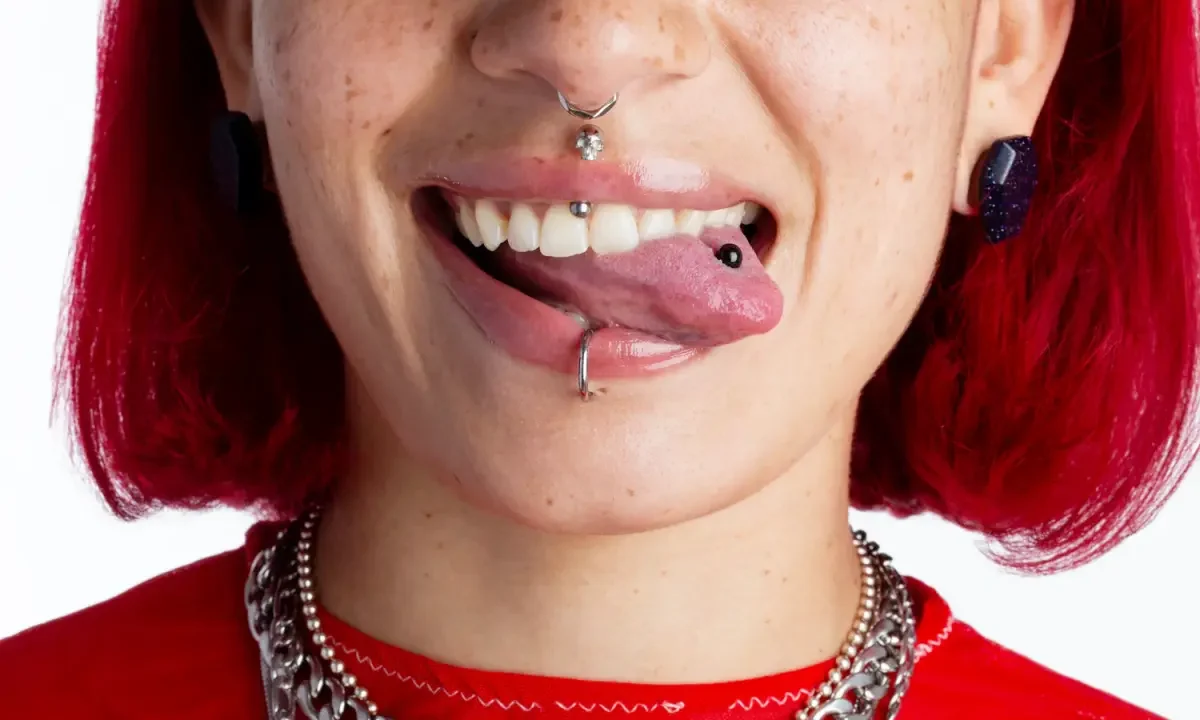
As a body piercing activity with a moderate risk level, it’s common for minor changes to occur during the healing process. However, many people are confused: the jewelry appears to have “sunk in”—is this normal embedding, or dangerous embedding? While these two conditions look very similar, they are fundamentally different. Misjudging them may delay treatment and even lead to infection or the need to remove the jewelry. This article will help you distinguish between the two in the most intuitive way and tell you when action is needed.
What is nesting?
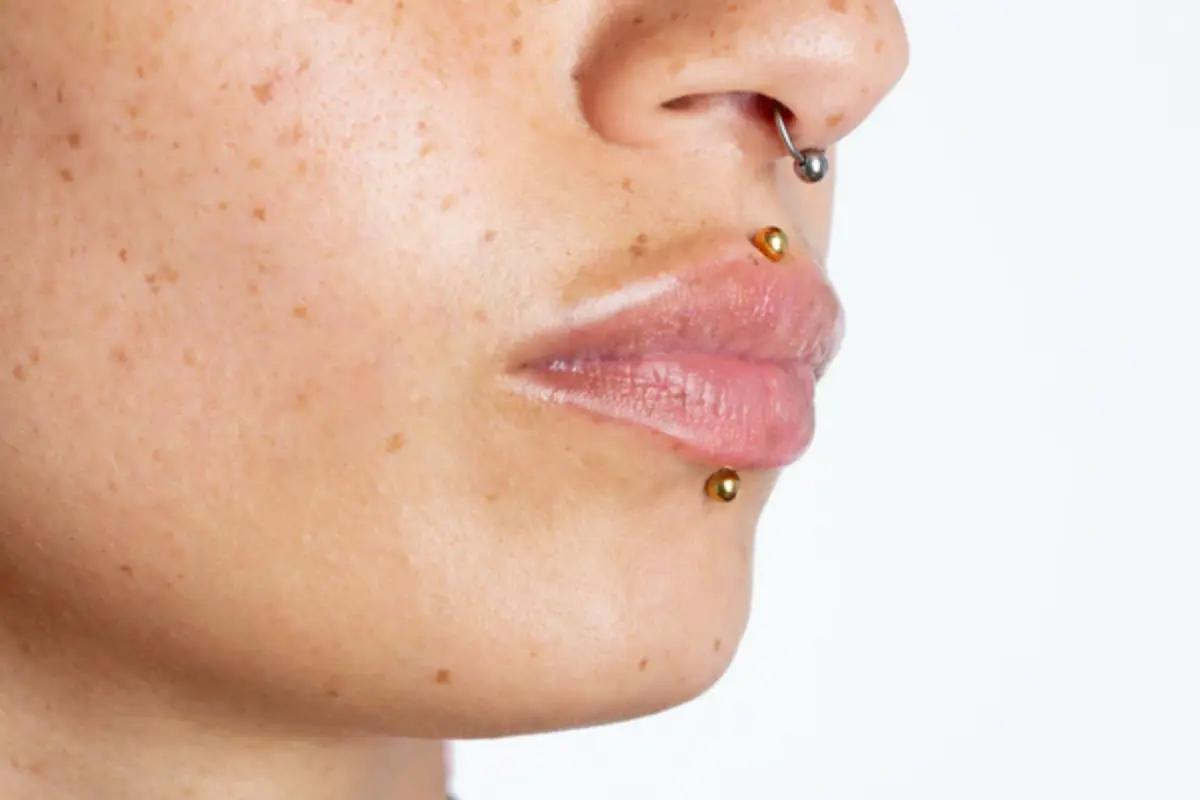
Embedding refers to the normal phenomenon where the soft tissue on the inside of the lip slightly envelops the base of the jewelry. During the healing process of a lip piercing, the oral mucosa will slightly “adhere” to the jewelry. This is a natural adaptation of the body and does not pose a safety risk.
Common signs: If you take out a mirror to examine the area, you’ll see a shallow “indentation” on the back of the lip stud or lip ring, and the edges of the base plate will be clearly visible. Touching it causes no significant pain or only mild discomfort. There are no abnormal symptoms, such as redness, swelling, pus, or fever. The jewelry can be moved slightly with gentle pressure. It’s like an indentation left by a pillow—it will quickly return to normal.
What is embedding?
Embedding is a condition that requires caution. It occurs when the jewelry is “swallowed” by the lip’s muscle tissue and begins to be covered by skin or mucous membrane. This usually indicates that the jewelry is too short, there is severe swelling, or improper aftercare.
Common symptoms:
When you slightly evert your lip and look at the inner surface, you cannot see the base of the jewelry (it is covered by tissue). Pressing on it with your finger causes noticeable swelling, increased pain, and a sensation of pressure. It feels as if the lip piercing jewelry has been “swallowed” by the tissue.
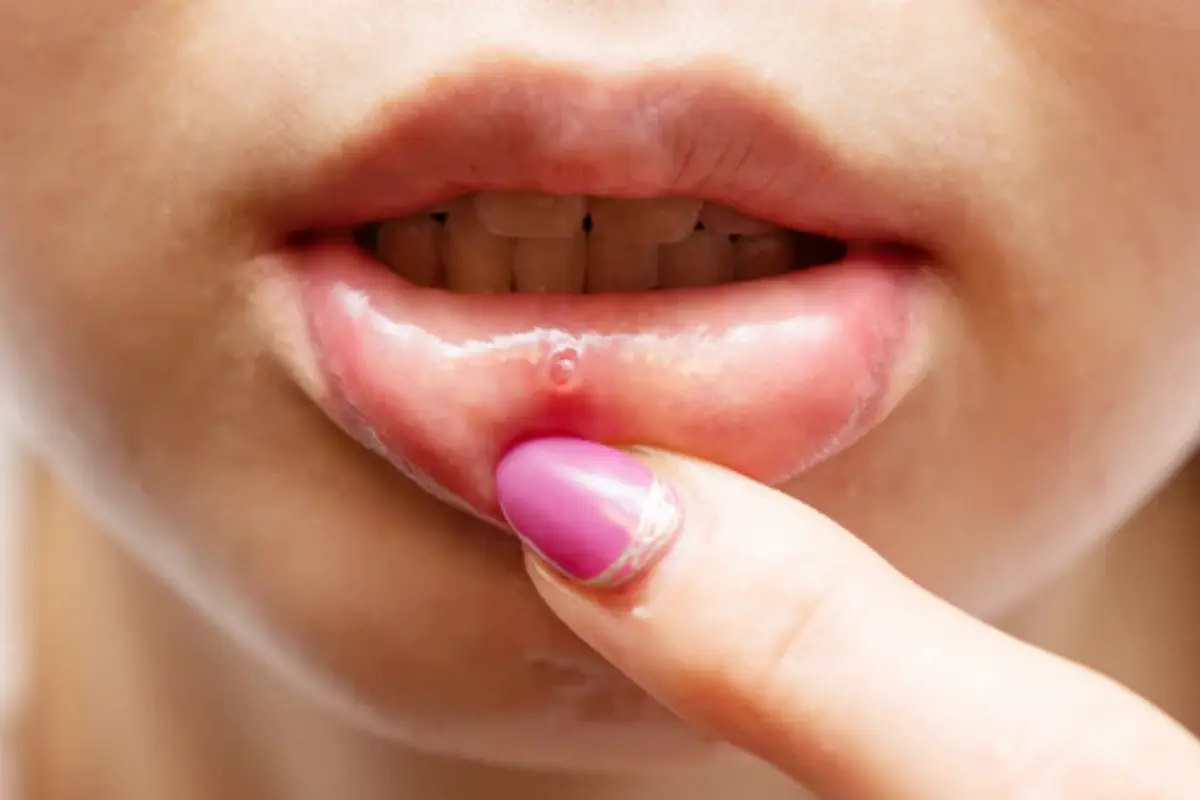
Embedded vs Nesting: How to Tell at a Glance
To help you quickly distinguish between normal nesting and abnormal embedding in lip piercings, here is a clear comparison table:
| Comparison Item | Nesting (Normal) | Embedding (Abnormal) |
|---|---|---|
| Jewelry Visibility | ✔ Visible | ❌️ Covered by skin |
| Pain Level | Mild or none | Noticeable pain |
| Swelling | Slight | Significant swelling |
| Mobility | ✔ Movable | ❌️ Difficult to move |
| Need for Treatment | ❌️ Not required | ✔ Requires prompt attention |
Why Does Embedding Occur?
Every problem has a cause. Embedding is rarely a matter of “bad luck”; there are specific reasons behind it:
1. The shank of the jewelry is too short
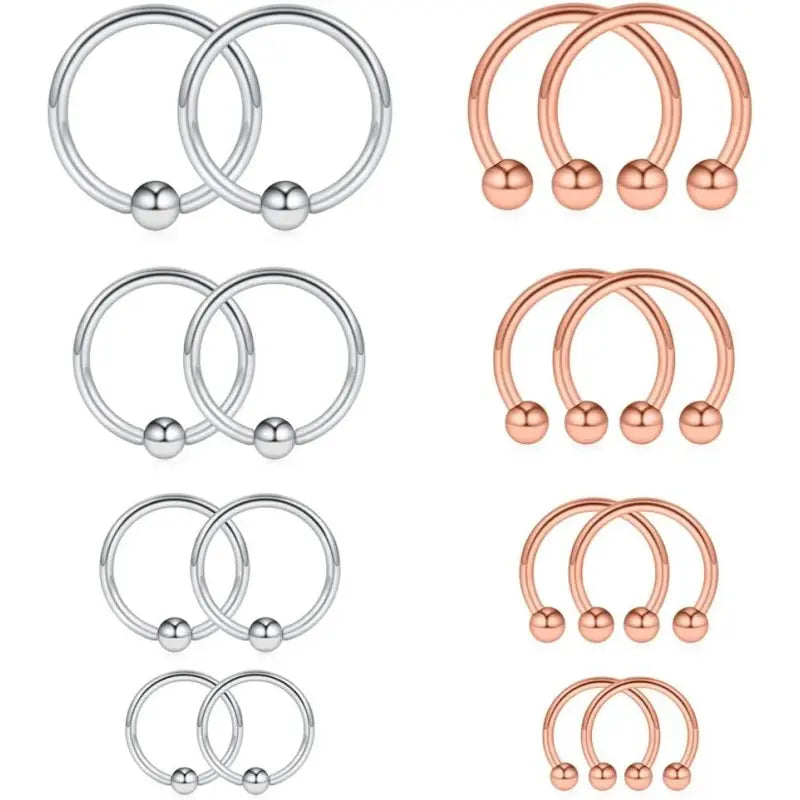
Lip studs come in shank diameters ranging from approximately 8mm to 16mm, with shank lengths typically between 0.5cm and 1cm. It is recommended to choose thinner, longer lip studs or lip rings with ample clearance. Swelling of the lips is normal immediately after piercing, but if the jewelry lacks sufficient clearance, it can easily become embedded in the lip tissue.Beginners can choose a full-size lip ring set with multiple designs, allowing them to freely select their favorite styles. These are suitable for wearing during the recovery and healing phases to prevent complications.
2. Excessive swelling
Since we use our mouths to eat, the food we swallow and chew will inevitably come into contact with the lip piercing jewelry to some extent. It is recommended to maintain a healthy, light diet to ensure the lips remain clean and comfortable. Avoid eating foods that are too spicy or too hot, and refrain from frequently chewing nuts, as frequent contact or friction between food or teeth and the piercing site can easily cause inflammation, swelling, and the jewelry to become embedded. Note that staying up late or having a weakened immune system during the healing period can also lead to excessive swelling.
3. Improper Care
Oral hygiene must also be addressed promptly. Failure to clean teeth thoroughly or using harsh mouthwashes can lead to bacterial infection at the piercing site. Another situation to avoid is frequently twisting the jewelry out of curiosity, as this can cause secondary damage to the skin tissue at the piercing site.
What to Do If the Jewelry Becomes Embedded?
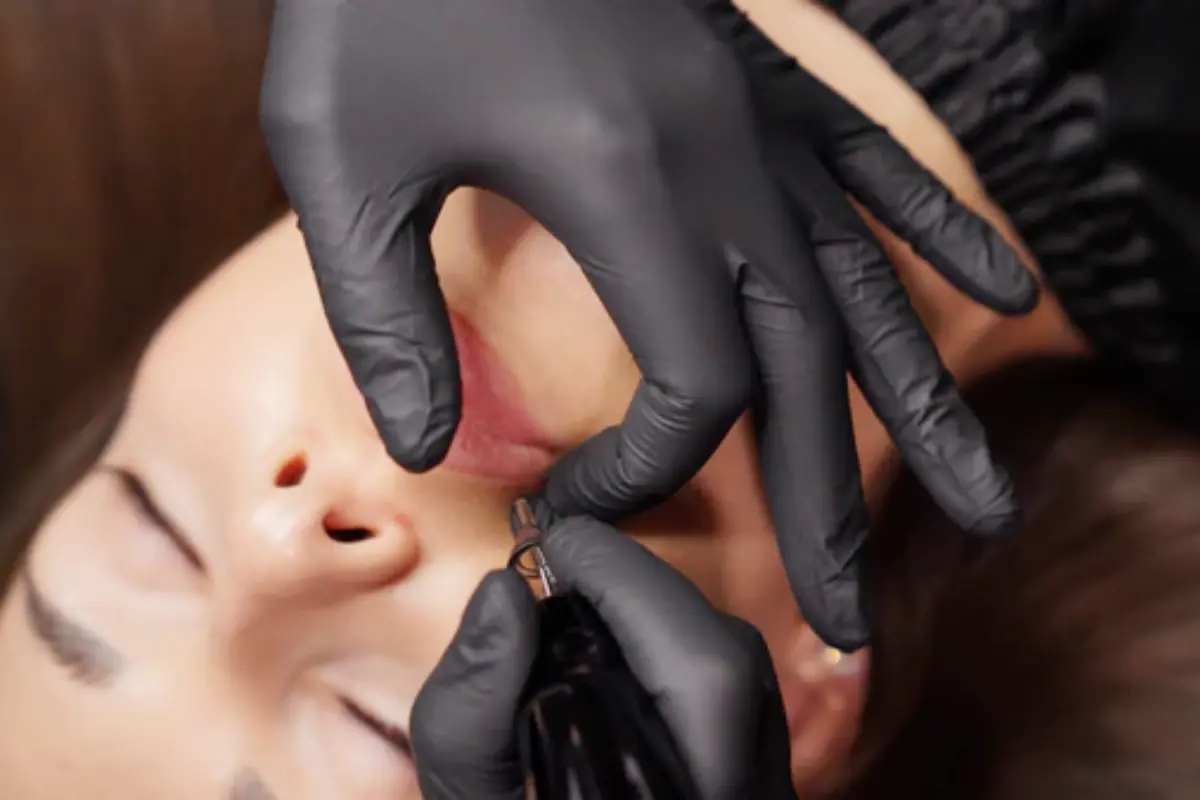
If you notice that your jewelry has become embedded, do not panic—everything can be resolved. First and foremost, stay calm. Never try to forcefully pull the jewelry yourself to separate the lip stud from the lip tissue! The correct approach is:
1. Mild embedding
Visit a professional piercer as soon as possible to switch to a longer piece of jewelry, preventing the embedding from worsening. Then, clean the area daily with saline solution to keep it clean and reduce bacterial contamination. Finally, avoid irritating foods in your daily diet.
2. Severe Embedment (Already Covered by Skin)
You must see a professional piercer or doctor immediately to have it addressed by a professional. Be prepared for the possibility that a small incision may be needed to remove the jewelry—this is a minor procedure, so there’s no need to be afraid. Do not take chances by thinking it’s a minor issue and delaying treatment, as this could lead to a serious bacterial infection.
How to Prevent This Situation?
By understanding the causes of embedment, we can know where to focus our efforts to prevent safety issues from occurring.
Choose jewelry of the appropriate length: When first getting pierced, be sure to leave “room for swelling” on your lip.
Watch your diet: Avoid spicy, hot, or alcohol-containing foods.
Keep it clean: Clean the outside of the lip with saline solution, and the inside with a mild, alcohol-free mouthwash.
Don’t touch it frequently: Remember that hands are one of the biggest sources of bacteria; avoiding contact can effectively reduce bacterial exposure.
A practical way to assess your piercing
You can look in the mirror every day and ask yourself three questions:
Can I still see the base of the jewelry?
Does it still move slightly?
Is the pain getting worse?
If the answer to all three questions is “normal,” it’s likely just a slight displacement. If the jewelry becomes invisible, painful, and stuck, it’s an ingrown piercing.
Distinguishing Between Settling and Embedment to Ensure Your Safety
When settling occurs, there’s no need to worry—it’s a normal part of the healing process. However, if you notice that your lip piercing has become embedded, this should serve as a warning sign, and you should seek medical attention promptly. Remember, while pursuing trendy piercing art is a personal choice, it’s essential to be mindful of the safety risks involved.