
Inner ear lobe piercings and outer ear lobe piercings are often confused with one another due to their similar names, but they are two distinctly different types of piercings, each with its own unique characteristics. Inner ear piercings have a history dating back hundreds of years and are among the most recognizable types of cartilage piercings, making them a favorite among those who want to add a touch of individuality to their ears. While outer ear piercings are not as common as inner ear piercings, they are growing in popularity as more people seek personalized ways to accessorize their ears.
I. Differences in Terminology
In everyday conversation, when people refer to “standard ear piercing,” they are generally referring to an inner auricle piercing, which is also the most common type of ear piercing.
Outer auricle piercings, on the other hand, have more nicknames. Common terms include “reverse ear piercing” and “high ear piercing.” These are niche piercing styles that combine elements of both the “snug” and “conch” piercings, making them more distinctive.
II. Differences in Piercing Location
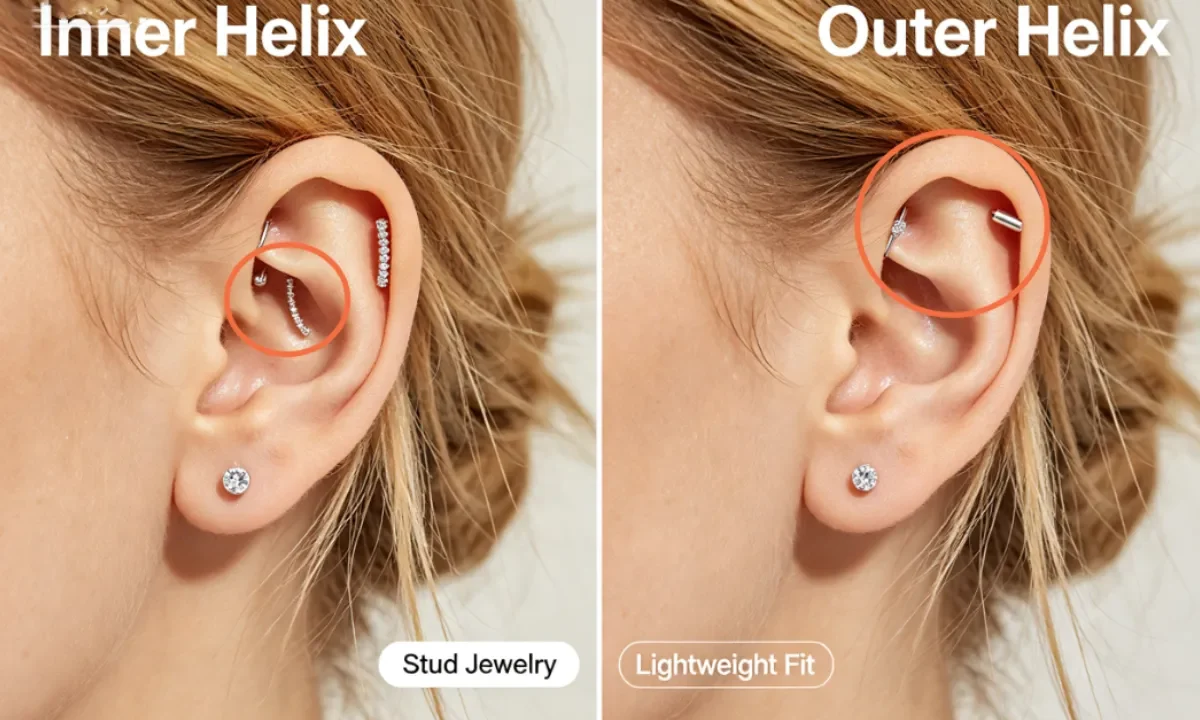
The most obvious difference between the two types of piercings is their location, as they target completely different ear structures.
Inner auricle piercing: The piercing is located above the ear canal, in the bowl-shaped concave area of the auricle, and penetrates the deep cartilage of the ear. The piercing location can be flexibly adjusted based on the jewelry being worn. If you want to wear hoop earrings, the piercing should be positioned closer to the outer edge of the auricle to allow the earrings to hang naturally; if you’re wearing simple stud earrings, the piercing can be placed slightly inward to ensure the jewelry sits centered on the ear for an aesthetically pleasing and balanced look.
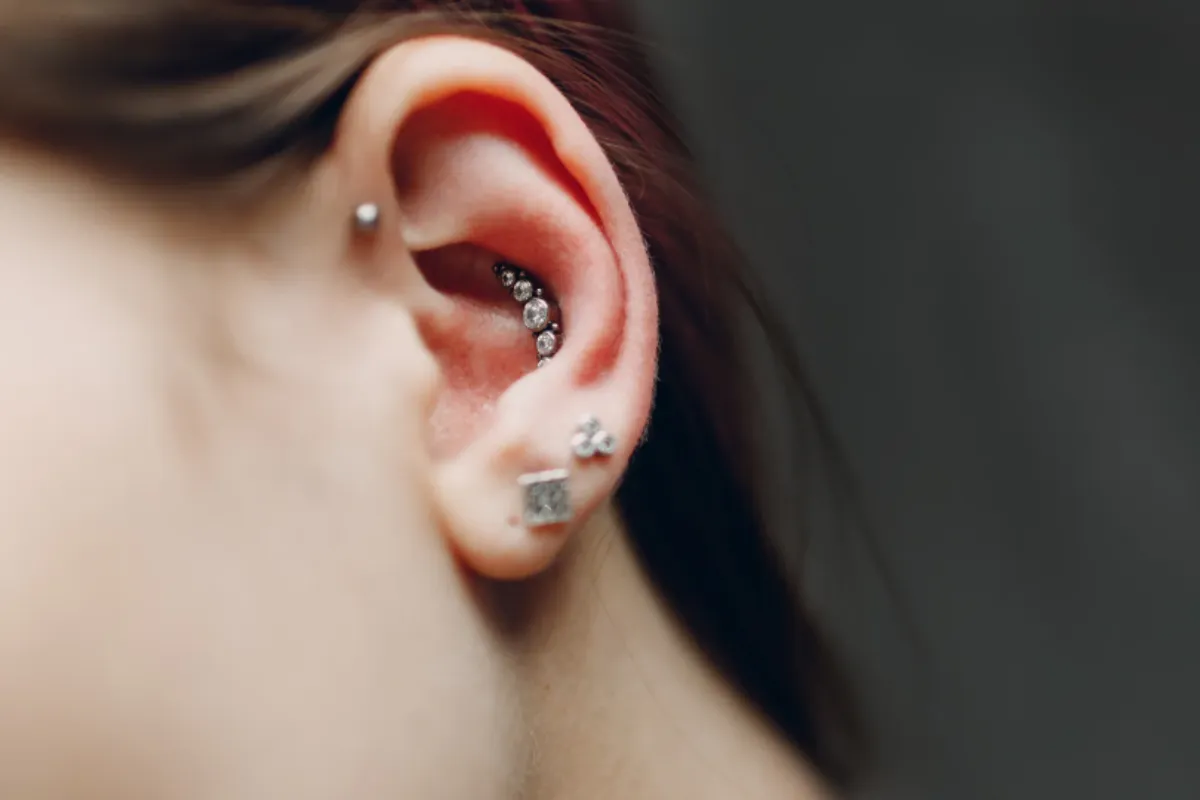
Outer Auricle Piercing: The piercing is located on the flat cartilaginous ridge at the top of the auricle—above the ear canal and below the helix—and is shaped by the cartilaginous structure on the upper outer side of the ear. This is an external ear piercing style.
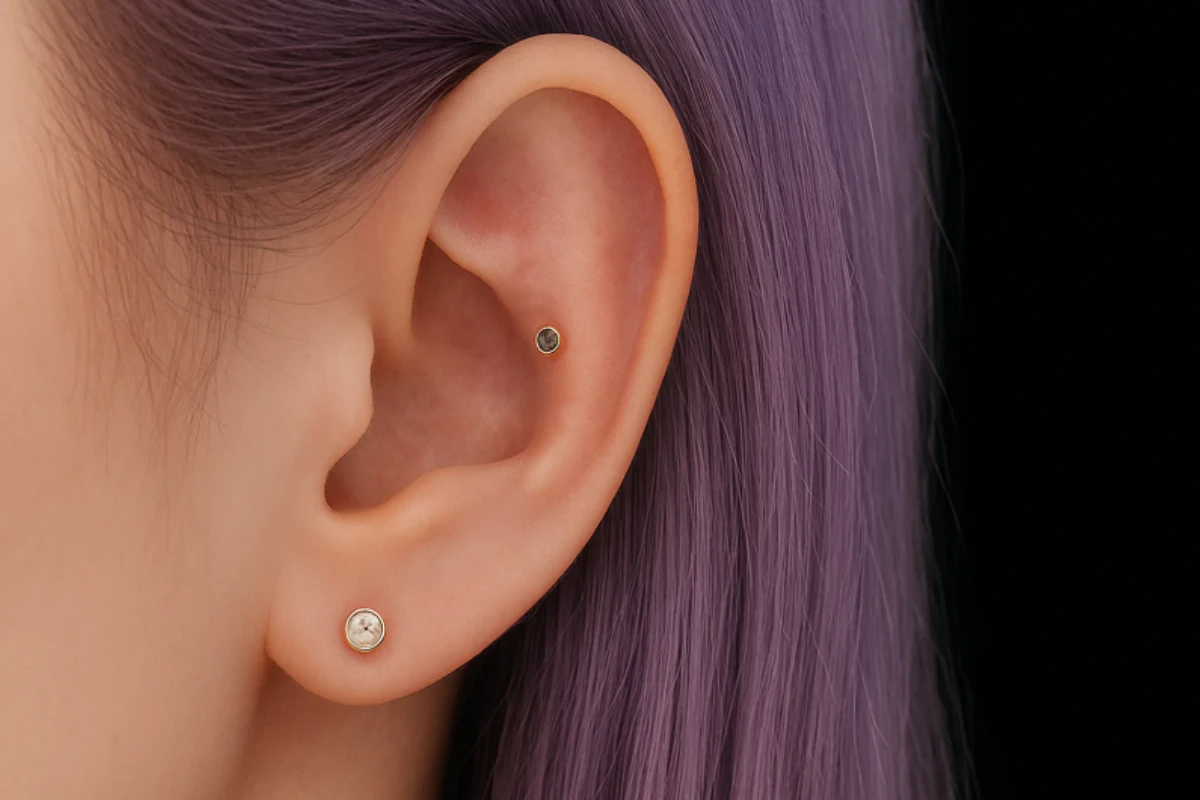
III. Anatomical Compatibility Requirements
The anatomical requirements for these two piercing styles differ significantly, which is a key factor for many people when making their choice.
Inner Auricle Piercing: This style is highly compatible with most ear structures and suits the vast majority of people. Only a small number of individuals who have undergone auricle fixation surgery may find this piercing unsuitable; the compatibility threshold is extremely low.
Outer auricle piercing: This is highly dependent on an individual’s natural ear structure, making it much more selective. It is only suitable for people with thin, soft, and flat auricular cartilage; if your outer auricle cartilage is thick or hard, piercing is strongly discouraged, as it can easily lead to poor healing, deformation, or inflammation. Consequently, the number of people suitable for this type is relatively small.
IV. Jewelry Selection
Different piercing locations result in vastly different suitable jewelry styles, which directly impact the overall look.
Inner Auricle Piercing: Jewelry options are highly flexible and versatile, with excellent compatibility. During the early healing phase, it is recommended to wear basic stud earrings to facilitate wound healing; once the piercing has fully healed, you can freely switch to various styles such as simple studs, cluster earrings, hoop earrings, and straight-bar earrings. If you wish to wear earrings immediately after the procedure, choose slightly larger styles in size 12G or larger to allow for swelling and ensure a secure fit without putting pressure on the wound.
Outer Ear Piercing: The range of suitable styles is limited; only stud earrings are recommended. Due to the location and cartilage structure, wearing hoop earrings will cause significant pressure and be extremely uncomfortable, so this is not recommended.
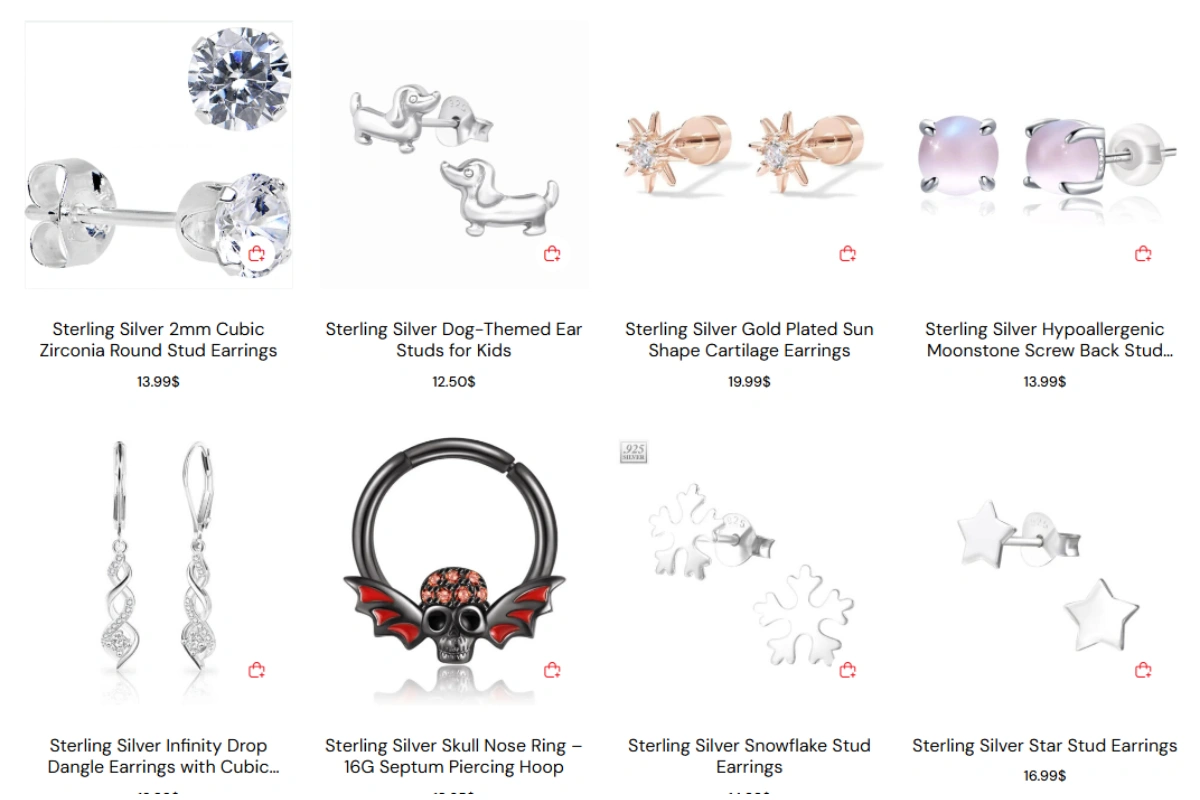
Taking into account the unique characteristics of these two types of ear piercings, the jewelry is specifically designed to balance aesthetics, comfort, and post-procedure care needs. The selection of earrings for the inner auricle is rich and diverse, ranging from simple basics to exquisite niche designs and trendy styles. Made from safe, skin-friendly materials and shaped to conform to the contours of the inner auricle, they won’t put pressure on the wound or hinder healing. They are suitable for both understated everyday looks and sophisticated, mood-enhancing styles. Specialized studs designed for the outer ear feature a lightweight, contoured design that follows the contours of the outer cartilage ridge. Compact in size and less likely to snag or catch on objects, they are perfectly suited to the unique piercing location on the outer ear, balancing comfort and aesthetics while minimizing friction and pressure on the delicate cartilage. They are suitable for both post-piercing care and long-term daily wear.
V. Healing Difficulty and Timeline
Considering piercing location, nerve distribution, and daily friction, there is a significant difference in healing difficulty between the two piercing types—a key factor for beginners to consider.
Inner Auricle Piercing: Lower healing difficulty and faster recovery. The piercing is located in a recessed area of the auricle, making it less prone to friction or snagging from clothing or hair in daily life, and providing a stable wound environment. The only precaution is to avoid wearing earplugs until the wound has fully healed to prevent inflammation caused by compression or blockage. With moderate nerve distribution and stable cellular recovery, this is an ideal cartilage piercing for beginners.
Outer auricle piercing: Higher healing difficulty and a longer recovery period. Because it is located on the protruding outer part of the ear, it is extremely prone to being touched or snagged in daily life. Additionally, its exposed position makes cleaning and maintenance more difficult, making it prone to bacterial growth and recurrent inflammation. At the same time, the cartilage in this area has poor pressure resistance, requiring extremely meticulous care. It is more suitable for those with piercing experience; beginners are advised to prioritize inner auricle piercings for a safer option.

VI. Inner Auricle Piercing vs. Outer Auricle Piercing: Final Conclusion
Although inner and outer auricle piercings have similar names, they are two distinct piercing methods, each adding its own unique charm to your ears. As a classic cartilage piercing, the inner auricle piercing has long been a topic of fascination; the outer auricle piercing, on the other hand, depends more on the anatomical structure of the ear—though less common, it is equally eye-catching. No matter which style suits you best, Gagabody can provide the perfect jewelry. We offer a wide selection for all types of ear piercings to help you achieve your ideal look.