
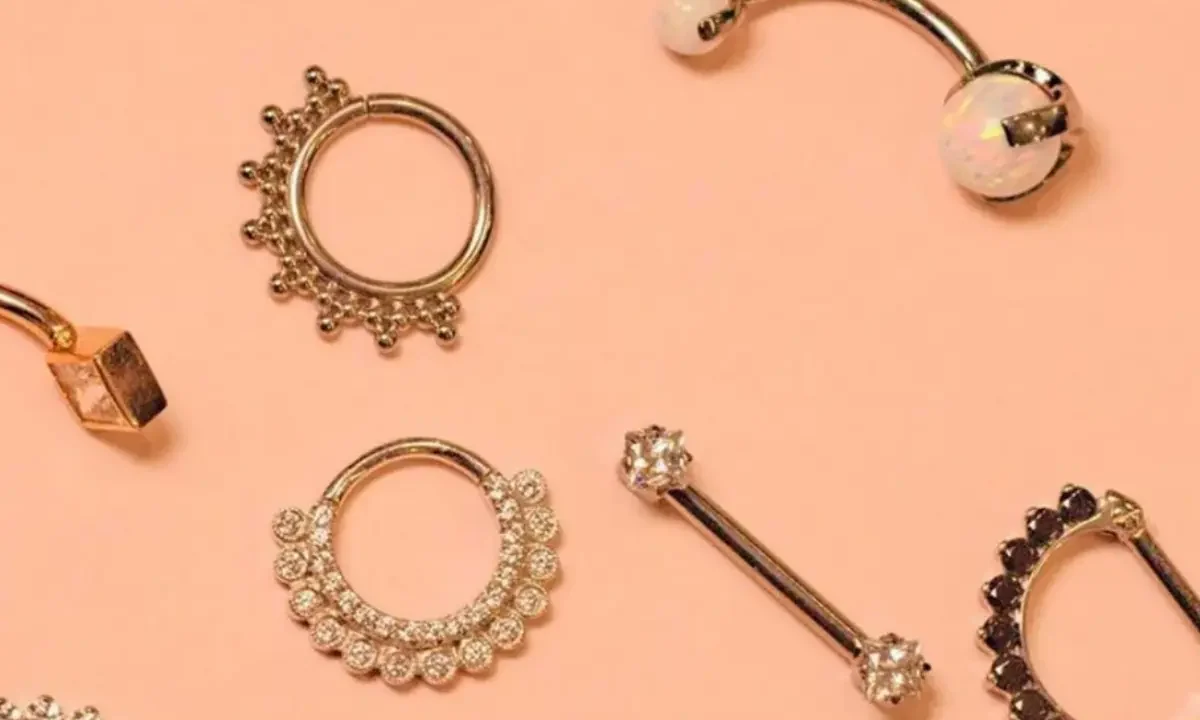
Many people, when first encountering pierced jewelry, instinctively treat it like ordinary jewelry: cleaning, storing, and wearing it the same way as rings and necklaces. However, those who have worn pierced jewelry long-term know that it’s a completely different system.
Pierced jewelry is not simply an ornament; it comes into direct contact with human tissue. Especially before the piercing is fully stabilized, proper care often determines the subsequent condition of the piercing. Based on our website’s years of research on pierced jewelry, we are happy to share some essential care knowledge.
Understanding the Differences in Care for Pierced Jewelry
The core focus for ordinary jewelry is on appearance and material maintenance, while the core focus for pierced jewelry is the coexistence of skin, tissue, and jewelry.
A piercing is essentially a man-made, minimally invasive channel. During the recovery period, it is neither a complete wound nor ordinary skin. Improper care can easily lead to redness, increased discharge, migration, or even rejection reactions.
Therefore, the care of pierced jewelry must consider three points simultaneously:
- Is the material suitable for prolonged contact with the human body?
- Does the wearing method minimize pulling and friction?
- Does cleaning and storage avoid secondary contamination?
- Details to pay attention to when wearing pierced jewelry for the first time?
The first time you wear it is the most crucial stage in the entire piercing care process
First, it’s important to understand: do not frequently change your jewelry. Many beginners, out of curiosity or aesthetic reasons, repeatedly change their jewelry in a short period, which is very likely to cause problems. Piercings need time to stabilize; changing them too early will repeatedly irritate the inner wall of the piercing.
Second, pay attention to the length and structure of the jewelry.
When initially wearing pierced jewelry, it’s usually necessary to allow some space to accommodate slight swelling. If the jewelry is too short or too tight, it can easily compress tissue, leading to discomfort or even embedding.
When wearing, the movements must be slow, avoiding rotation, pulling, or forcibly adjusting the angle. Many problems are not caused by the jewelry itself, but by unnecessary “extra movements” during the wearing process.
Safety and daily habits during wearing
The most easily overlooked issue in daily wear of pierced jewelry is external interference.
Sleeping, changing clothes, washing hair, and wearing headphones or helmets are all high-risk scenarios. This is especially true for ear, eyebrow, and lip piercings, which can easily get caught in something. It’s recommended to avoid wearing accessories that easily get tangled during the recovery period and to be mindful of clothing collars and towel fibers.
Also, avoid frequently touching pierced jewelry with your hands. Even if your hands look clean, they may carry bacteria. Many inflammations aren’t caused by insufficient cleaning, but rather by “touching too much.”
If you experience mild redness or increased discharge, don’t immediately remove the jewelry. Removing it too early can actually close the piercing, leaving the problem inside.
Cleaning and Storage of Pierced Jewelry
The goal of cleaning pierced jewelry is not “the cleaner the better,” but rather to avoid over-cleaning and irritation.
Avoid using cleaning agents containing alcohol or strong irritants, especially during the recovery period. Gentle cleaning, thorough rinsing, and air drying are safer methods.
When not wearing pierced jewelry, store it separately and avoid mixing it with other jewelry. Mixing can easily cause scratches and may lead to cross-contamination of bacteria. It is recommended to use a separate small storage box to keep it dry and well-ventilated.
For pierced jewelry that is not worn frequently, the threads, clasps, and other parts should be checked regularly to ensure the structure is intact and to prevent it from becoming loose or stuck when worn again.
Maintenance details that long-term wearers only care about
Once the piercing is fully stabilized, the focus of care shifts from “restoration” to “long-term comfort.” At this time, you can appropriately change to different styles of jewelry, but you still need to pay attention to the compatibility of the materials. Not all seemingly delicate jewelry is suitable for long-term wear. If you experience persistent discomfort while wearing it, you should first consider whether the jewelry’s structure is suitable, rather than trying to tough it out. In addition, giving the piercing a “rest” periodically is also a form of maintenance. Briefly removing the jewelry for cleaning and observation helps to identify potential problems early.
Different care requirements for different piercing areas
Many piercing problems are not caused by inadequate care, but by using the wrong care methods. Different areas have different tissue structures, activity frequencies, and degrees of external force influence; therefore, the focus of care should also differ.
1. Earlobe Piercing
The earlobe is soft tissue with relatively good blood circulation, making it one of the fastest-healing and lowest-risk piercing sites. However, precisely because of this, many people become complacent too early.
Common problems with earlobe piercings often stem from frequently changing jewelry or wearing overly heavy earrings. Before the piercing is fully stable, heavy earrings can stretch the piercing channel, causing it to elongate and even feel slightly torn.
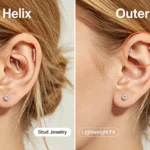
The key to care is maintaining stability, avoiding pressure during sleep, and minimizing unnecessary rotational movements. Even if the earlobe no longer appears red or swollen, it’s recommended to continue wearing simple, lightweight jewelry for a period of time.
2. Cartilage Piercing
Cartilage piercings are considered by many to be the “difficult” type to heal. Cartilage has weaker blood circulation, resulting in a significantly longer recovery period and greater sensitivity to external stimuli.
The core keyword for cartilage piercing care is stability.
Sleeping on it, friction from headphones, and hair tangling can repeatedly irritate the piercing area, prolonging recovery time. It is recommended to adjust your sleeping position during the recovery period to avoid prolonged pressure on one side.
3. Nasal Piercing
Nasal piercings are adjacent to the respiratory system, creating a relatively complex environment. This means that the focus of care should be on the method of cleaning rather than the frequency. Nasal piercings are easily affected by air, dust, and daily contact, but avoid using harsh products when cleaning. Over-cleaning can damage the skin’s natural barrier, making the piercing area more prone to dryness or discomfort.
During wearing, pay special attention to actions such as sneezing, washing your face, and removing makeup to avoid unconsciously pulling on the jewelry. Once the nasal piercing has stabilized, it is usually very comfortable, but it is essential to give it sufficient time initially.
4. Lip Piercings
Lip piercings come into contact with both the skin and the oral cavity. This means that care cannot focus solely on the outer side.
The outer side needs to be kept clean and dry to avoid makeup residue irritating the piercing area; the inner side requires attention to oral hygiene to reduce unnecessary friction and impact. When first wearing the piercing, slowing down your eating speed and avoiding excessively hot or hard foods is a very practical suggestion.
During the recovery period after a lip piercing, the choice of jewelry length is particularly important. Leaving room reduces pressure from swelling and lowers the likelihood of discomfort on the inside of the lip.
Mastering the care of pierced jewelry is fundamental to body piercings
Pierced jewelry is never a “wear and forget” affair; it’s more like a relationship that requires patient maintenance. What truly keeps piercings healthy isn’t expensive jewelry, but rather correct understanding, consistent habits, and respect for your body’s reactions.
When you begin to treat pierced jewelry professionally and gently, it will accompany you for a longer, more stable, and more comfortable time.